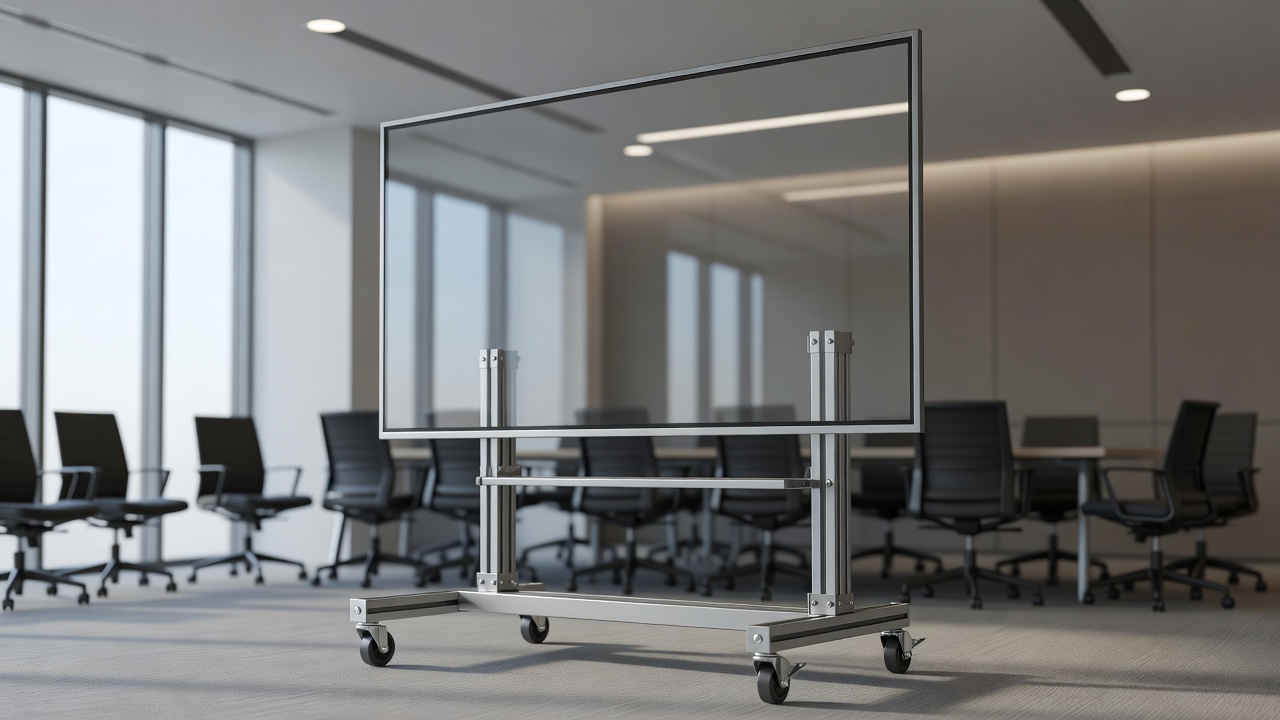
Display Selection: Commercial Panels vs. Laser Projection
Presentation readability is determined by ambient illumination, screen size, and viewing distance. We maintain two distinct categories of visual display hardware: commercial flat panels and high-output laser projection systems.
Commercial flat panels offer continuous high-contrast imagery in daylight environments. Unlike domestic consumer TVs, commercial monitors feature 500–700 nit panel brightness, robust thermal dissipation, anti-reflective matte front filters, and metal internal chassis engineered for road transport. They operate continuously without burn-in or brightness thermal throttling.
Laser projection is deployed when required screen diagonal exceeds 100 inches. Modern solid-state laser engines eliminate warm-up and cool-down cycles, reaching full brightness within seconds. Fast-fold screens with front or rear projection fabrics allow clean integration against stage backdrops.
Viewing Distance and Aspect Ratios
All rental displays adhere to native 16:9 widescreen or 16:10 computer presentation ratios. Ultra-wide formats (21:9) are available for side-by-side video conferencing layouts where content and participant galleries share a single surface.
| Display Type | Diagonal Size | Optimal Viewing Distance | Ambient Light Tolerance |
|---|---|---|---|
| Commercial LCD | 55" – 65" | 2.0m to 5.0m | High (unshaded daylight acceptable) |
| Commercial LCD | 75" – 85" | 3.5m to 8.0m | High (bright office fluorescent) |
| Commercial LCD | 98" | 4.5m to 12.0m | High (demands flat floor access) |
| Laser Projection | 120" Fast-Fold | 5.0m to 15.0m | Moderate (requires blind reduction) |
| Laser Projection | 150"–200" Fast-Fold | 8.0m to 25.0m | Moderate (requires stage lighting control) |
Confidence Monitors and Stage Sightlines
Presenters must never turn their backs to the audience to read slides projected behind them. We supply low-profile stage confidence monitors mounted on 30-degree angled floor wedges or slimline rolling pedestals.
Confidence feeds are driven by dedicated matrix outputs. Presenters see slide progression, presenter notes, and synchronized elapsed session timers, while audience screens display full-frame slide graphics without notes or control bars.
Signal Interfaces, Adapters & Laptop Compatibility
Presenter laptops arrive with unpredictable hardware ports. Modern ultrabooks feature solely Thunderbolt/USB-C ports, while older enterprise workstations rely on full-sized HDMI or legacy DisplayPort.
We supply hardwired adapter rings securely locked to presenter cable tails. These rings contain certified active adapters for USB-C (DisplayPort Alternate Mode), Mini DisplayPort, and standard HDMI. Signal paths utilize Active Optical Cables (AOC) for cable runs over 10 meters, preventing the signal degradation and frame drops common with copper HDMI cables at 4K 60Hz bandwidths.
Physical Placement and Safety
A 98-inch commercial screen weighs in excess of 70 kilograms. Unstable tripod stands present unacceptable tipping hazards in corporate environments.
Our large-format displays mount exclusively on heavy dual-column aluminum truss carts equipped with lockable industrial castors, weighted steel baseplates, and certified VESA mounting brackets with secondary mechanical safety locking bars. Setup protocols require two certified technicians for any panel exceeding 65 inches.